
Welcome to the definitive guide for determining the best time of day to post on Facebook. You’ve crafted the perfect message, designed a stunning visual, and aligned it with your campaign goals. But if you publish it when your audience is offline or distracted, all that effort goes to waste.
The Facebook algorithm heavily prioritizes content that generates immediate engagement. Posting at the right time gives your content that crucial initial boost, signaling to the algorithm that it's valuable and worth showing to a wider audience. This isn't just about getting a few extra likes; it's about maximizing organic reach, driving website traffic, and achieving your core business objectives. The principle of audience engagement through timely posting extends beyond Facebook; for instance, understanding the best times to post on TikTok is equally crucial for platform success.
This comprehensive roundup will break down 10 data-backed time slots, moving beyond generic advice to provide actionable strategies for specific industries, audience behaviors, and global timezones. We'll explore the 'why' behind each window, from the psychology of the morning commute to the leisure scrolling of a Saturday night.
More importantly, we'll show you how to implement these strategies seamlessly using a powerful scheduling tool like OneUp. You can use its bulk CSV uploader to queue hundreds of posts at once, set evergreen posts to automatically repeat at custom intervals, and even schedule the first comment to keep your captions clean. By connecting your Facebook Pages, Groups, and Profiles, all while targeting these optimal time slots, you can stop guessing and start posting with data-driven precision.
1. Weekday Mornings (8-10 AM)
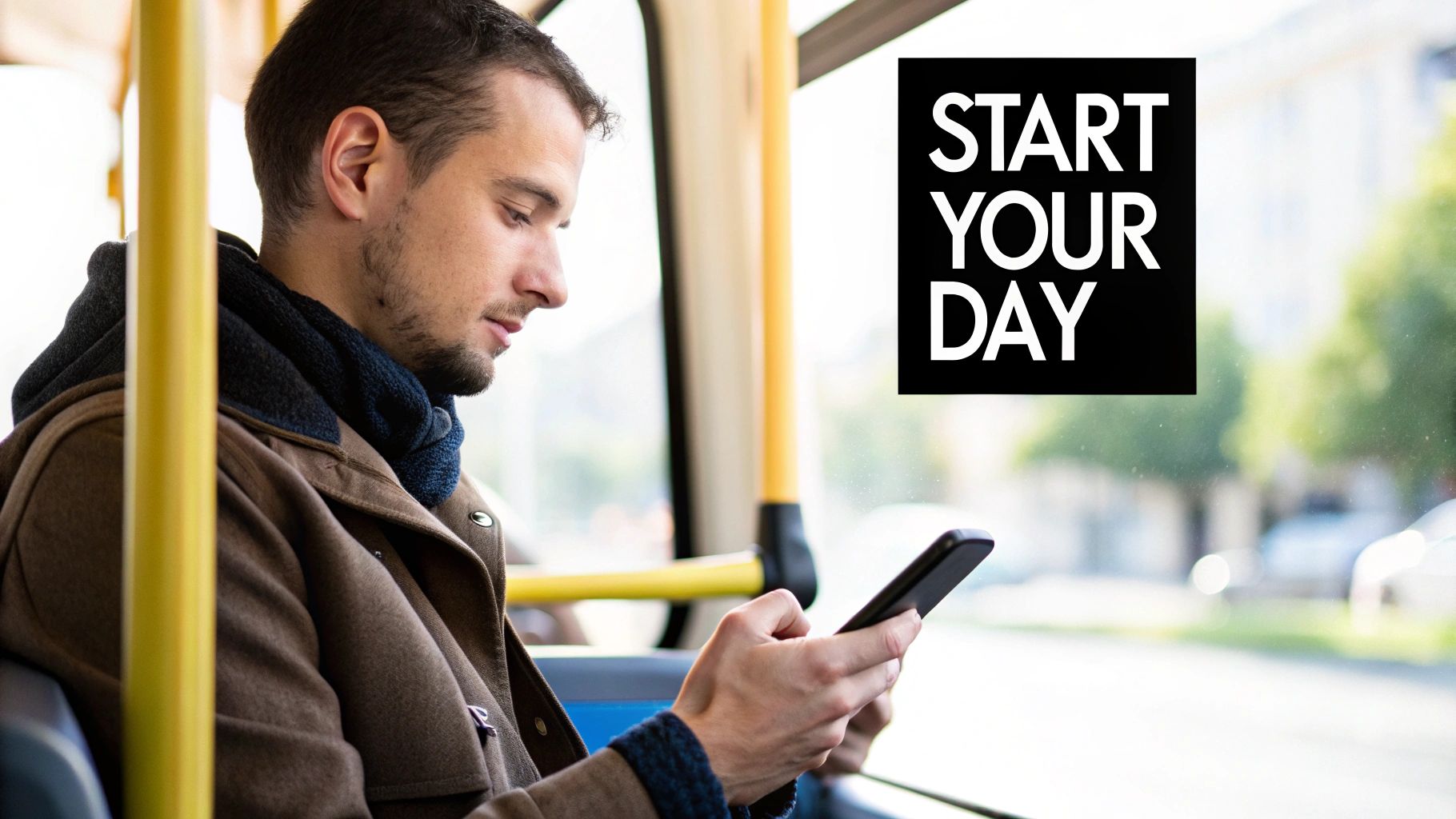
Capitalizing on the morning routine is a classic, data-backed strategy for boosting Facebook engagement. The 8 AM to 10 AM window on weekdays captures users during a predictable daily ritual: their commute or the first moments at their desk. During this time, people often turn to social media for a quick catch-up on news, updates from friends, and content from brands before their workday fully commands their attention.
This timeframe is particularly effective because it aligns with peak content consumption habits. As users sip their morning coffee, they are in a receptive mindset, actively scrolling through their feeds. This creates a prime opportunity for brands, especially in the B2B, news, and education sectors, to present valuable information when their audience is most likely to absorb it.
Why It Works & Real-World Examples
Studies from industry leaders like HubSpot and Sprout Social consistently highlight this period as a high-engagement zone. The logic is simple: you're meeting your audience where they are, right at the start of their day.
- B2B Brands: Companies like Salesforce and Marketo often schedule their latest blog posts, industry reports, and webinar announcements for this window to reach professionals as they plan their workday.
- News Outlets: Major news organizations, from The New York Times to local affiliates, push their morning briefing posts between 8 AM and 9 AM to become part of their audience's daily information diet.
- SaaS Companies: A SaaS company promoting a new productivity feature can capture significant attention by posting a short video tutorial at 9 AM, just as potential customers are thinking about streamlining their daily tasks.
How to Implement This Strategy
To effectively target the weekday morning slot, precision and consistency are key.
- Timezone-Specific Scheduling: Use a scheduler like OneUp to schedule your posts for 8 AM, 9 AM, or 10 AM in your audience's primary timezone. This ensures your content appears at the right local time, regardless of where you are.
- Morning-Themed Content: Tailor your posts to the morning context. Use calls-to-action like, "Start your Tuesday with this productivity tip" or "Here's what you need to know this morning." This contextual framing makes the content feel more relevant. If you need inspiration, you can use OneUp's AI-powered Facebook post generator to craft compelling morning-focused captions.
- Monitor Your Sweet Spot: While 8-10 AM is a strong general guideline, your specific audience might be most active at 8:15 AM or 9:30 AM. Use your Facebook Insights to pinpoint the exact time that generates the most reach and engagement, then adjust your schedule accordingly. OneUp's "Post Now" button lets you immediately share timely content if you spot a live trend.
2. Midday Posts (12-1 PM Lunch Hour)
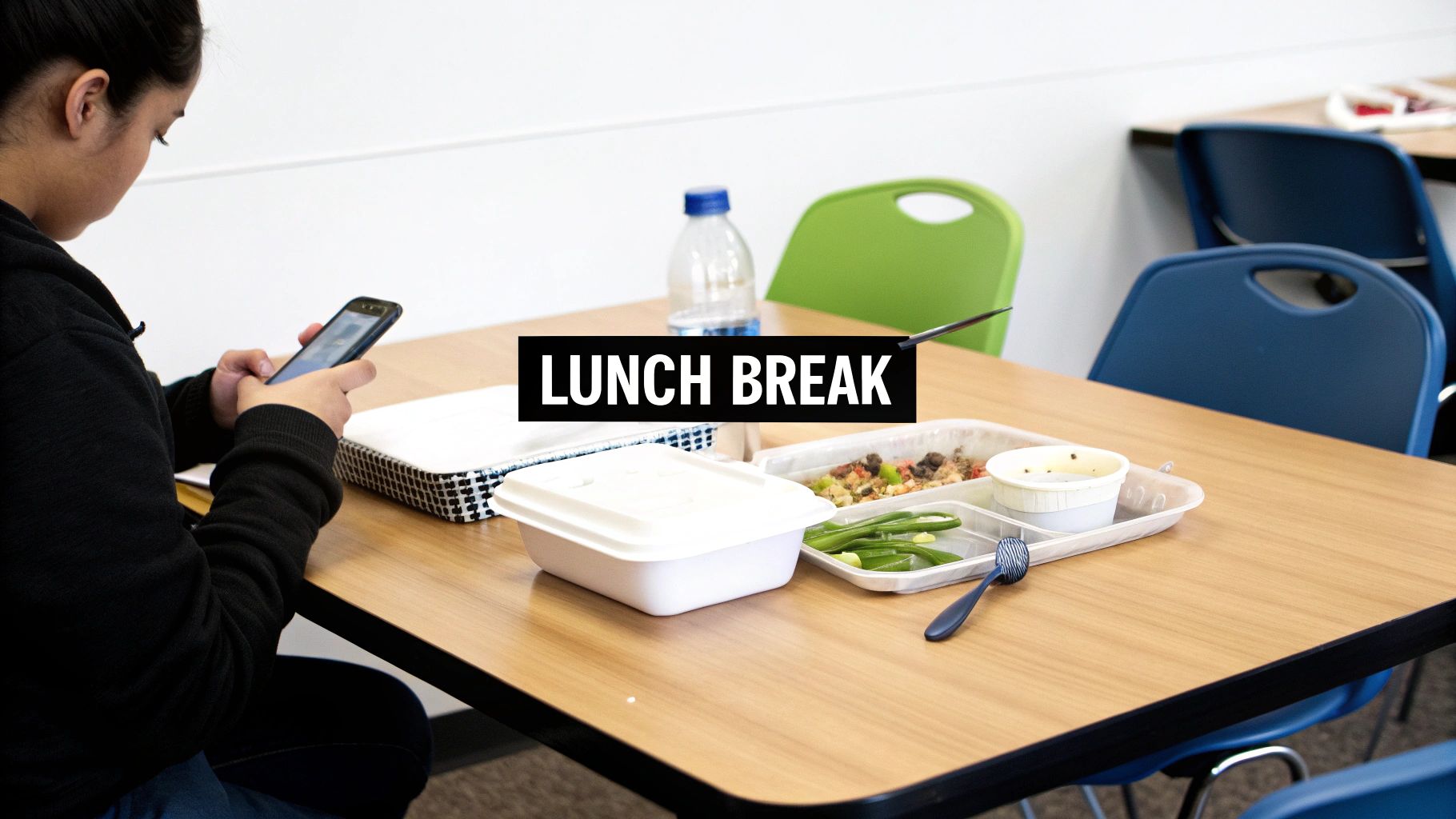
The midday lunch break offers a powerful, concentrated window for reaching your audience. Between 12 PM and 1 PM, users across industries step away from their work, using the downtime to decompress, eat, and scroll through their social media feeds. This period represents a significant daily peak in mobile usage, making it a golden opportunity for brands to capture attention when users are actively seeking a mental break.
This timeframe is especially effective for consumer-facing brands (B2C), e-commerce, and entertainment content. Users are in a more relaxed state of mind and are more likely to engage with fun, visually appealing, or promotional content. Finding the best time of day to post on Facebook often means aligning your content with your audience's daily rhythms, and the lunch hour is a universal constant.
Why It Works & Real-World Examples
Studies from social media platforms and marketing analytics firms consistently show a spike in engagement around noon. Your audience is taking a break and looking for a distraction, and your content can be that perfect intermission.
- Media Companies: Viral content giants like BuzzFeed have perfected this slot, often scheduling their most clickable quizzes and listicles to go live right at noon to maximize shareability.
- Restaurant & Food Brands: A local restaurant chain can post a mouth-watering special at 12:15 PM, directly influencing lunchtime decisions and driving immediate foot traffic.
- E-commerce Brands: Online retailers frequently report high click-through and conversion rates from flash sales or new product announcements posted during the lunch hour, catching shoppers when they have time to browse.
How to Implement This Strategy
Capitalizing on the midday rush requires timely and visually compelling content.
- Schedule for Peak Engagement: Use a scheduling tool to post precisely between 12 PM and 1 PM in your audience's key timezones. If you have a national audience, OneUp's ability to schedule the same post for multiple times allows you to hit the lunch hour in different regions, like 12 PM EST and then again at 12 PM PST.
- Create "Break-Worthy" Content: Post content that is easy to digest quickly. Think eye-catching videos, vibrant images, polls, or questions. This is not the time for long-form text. You can even use OneUp's integration with Canva and Unsplash to design stunning visuals directly within the scheduling workflow.
- Optimize with Hashtags: Boost visibility by including relevant hashtags. To make this easier, you can find the perfect tags for your midday posts with a Facebook hashtag generator and save them in OneUp's caption templates for quick reuse.
3. Afternoon Slump (2-4 PM)
Targeting the mid-afternoon energy dip is a powerful strategy for capturing a different kind of audience attention. Between 2 PM and 4 PM, many people experience a "slump" in productivity and begin seeking distractions from their work. This is when they turn to Facebook for a mental break, creating a window of opportunity for lighter, more entertaining content to shine.
This timeframe is ideal for content that doesn't require deep concentration. Users are looking for a quick escape, a laugh, or something visually engaging to break up their day. Brands in the entertainment, retail, and B2C sectors can leverage this by providing scroll-stopping content that meets the audience's need for a brief, enjoyable distraction before the final push of the workday.
Why It Works & Real-World Examples
Social media experts and viral marketing agencies have long recognized this period as a peak time for shareable, fun content. The logic is rooted in psychology: as focus wanes, the desire for easy-to-digest entertainment grows, making it a key moment to determine the best time of day to post on Facebook for engagement.
- Entertainment Brands: Netflix or Disney+ often drop new trailers or fun trivia about their shows around 2-3 PM to catch people looking for something exciting to watch later.
- Meme Pages & Creators: Viral content creators frequently schedule their most relatable or humorous posts for 3 PM, knowing their audience is most likely to tag friends and share content during this lull.
- E-commerce Stores: A retail brand might post a vibrant user-generated content (UGC) photo or a "pick your favorite" poll in the afternoon, prompting quick interaction without demanding significant mental effort.
How to Implement This Strategy
To succeed during the afternoon slump, your content needs to be attention-grabbing and easy to engage with.
- Schedule Entertaining Content: Use OneUp's scheduling tool to queue up your lighter content for this 2-4 PM slot. This could include memes, funny videos, quick polls, or visually appealing graphics that stand out in a busy feed. The visual calendar makes it easy to see your content distribution at a glance.
- Focus on Visuals: This is the perfect time for short-form video, Reels, or striking images. OneUp allows you to easily upload multiple images for carousel posts or schedule videos directly, ensuring they are perfectly timed to capture attention when users are mindlessly scrolling.
- Encourage Quick Interaction: Craft your captions to spark immediate conversation. Ask simple questions like, "Which one would you choose?" or "Tag a friend who needs to see this." This type of low-friction engagement is perfect for an audience seeking a quick distraction.
4. Early Evening (5-6 PM Post-Work)
Targeting users as they transition from their professional to personal lives is a powerful strategy for capturing high engagement. The 5 PM to 6 PM window on weekdays catches people during their commute home or as they first begin to unwind, a time when they frequently turn to social media for a mental break, entertainment, and to catch up on what they missed during the day.
This timeframe is especially valuable for consumer-facing brands because it aligns with a shift in mindset. Users are moving away from work-related tasks and are more receptive to content related to their hobbies, shopping interests, and evening plans. This creates a golden opportunity for brands in the retail, entertainment, and lifestyle sectors to connect with a relaxed and engaged audience.
Why It Works & Real-World Examples
Data from numerous social media studies confirms that this post-work period sees a significant spike in user activity. The logic is straightforward: you are connecting with your audience when they have more free time and are actively seeking a distraction from the workday. This is a key reason why it's often considered one of the best times of day to post on Facebook for B2C companies.
- Retail & E-commerce Brands: An online clothing store can launch a flash sale at 5 PM, catching users as they browse on their commute and are more inclined to make impulse purchases to treat themselves after a long day.
- News Outlets: Media companies often post "end-of-day" summaries or feature stories between 5 PM and 6 PM, providing a comprehensive recap for those who were too busy to follow the news cycle earlier.
- Fitness & Wellness Brands: A gym or fitness influencer could post an energetic workout routine or a healthy dinner recipe at 5:30 PM to inspire their audience's evening plans and promote a healthy lifestyle.
How to Implement This Strategy
To maximize the potential of the early evening slot, focus on content that helps your audience decompress and switch gears.
- Timezone-Aware Scheduling: If your audience spans multiple timezones, this window is critical. Use a scheduler like OneUp to post at 5 PM local time for each major segment of your audience, ensuring your content is timely for everyone.
- Transitional Content: Frame your posts to align with the end-of-work mood. Use captions like, "Ready to unwind? Here's something to look forward to tonight," or "Leave work behind with our latest arrivals." This contextual approach makes your content feel more appropriate and engaging.
- Promotional Power: This is a prime time for direct calls-to-action. Schedule limited-time offers, event reminders, or "shop now" posts. With OneUp's UTM link shortener integration, you can track the performance of these promotional links directly back to your marketing campaigns.
5. Prime Evening (7-9 PM Leisure Time)
As the workday ends and dinner is over, users transition into prime leisure time, making the 7 PM to 9 PM window a goldmine for Facebook engagement. This period captures your audience when they are most relaxed, actively unwinding, and prepared to spend significant, uninterrupted time scrolling through their feeds. They are no longer multitasking but are settled in, specifically seeking entertainment, connection, and engaging content.
This timeframe often represents the absolute peak of daily user activity on the platform. With daily responsibilities out of the way, people are more likely to watch longer videos, read detailed captions, and participate in discussions. This makes it the perfect moment to deploy your highest-value, most compelling content, as it has the greatest potential to capture undivided attention and drive meaningful interactions.

Why It Works & Real-World Examples
The logic behind the evening peak is straightforward: it’s the intersection of high user availability and a receptive, relaxed mindset. This period is a top contender for the best time of day to post on Facebook for B2C brands, entertainment companies, and creators focused on building a community.
- Entertainment Brands: Netflix and HBO frequently schedule major trailers and series announcements for 8 PM to capitalize on peak viewership and generate immediate buzz as people decide what to watch.
- Major B2C Brands: Companies like Nike and Coca-Cola often save their biggest campaign launches and most visually stunning content for this window to maximize shares, comments, and viral potential.
- Influencers: Top creators often host Facebook Live sessions or post their most important content around 7:30 PM, encouraging real-time interaction and deep engagement from their dedicated followers.
How to Implement This Strategy
Winning the evening slot requires high-impact content that can stand out when competition for attention is highest.
- Save Your Best Content: This is not the time for routine updates. Use this window for your most engaging content: compelling videos, thought-provoking questions, major announcements, or visually stunning graphics.
- Focus on Video and Interactivity: Video content performs exceptionally well during these hours. Use OneUp to schedule your Facebook Reels or longer-form videos for this peak time. You can even upload a custom video thumbnail to maximize click-through rates.
- Launch and Engage in Real-Time: Plan major launches or announcements for 7 or 8 PM. Use OneUp’s social media calendar to schedule the post, then be available to respond to comments as they come in. This real-time engagement can significantly boost your post’s reach in the algorithm.
6. Thursday Afternoon (3-5 PM Specific Day)
As the work week nears its end, user attention begins to shift from demanding tasks to weekend planning and leisurely browsing. Thursday afternoon, specifically between 3 PM and 5 PM, capitalizes on this transition, combining mid-week momentum with the anticipation of time off. This window often represents a peak in social media activity as people mentally check out from work, making it an incredibly potent time to post on Facebook.
This timeframe is frequently cited in social media studies as one of the highest engagement periods of the entire week. Users are wrapping up projects and are more inclined to take short social media breaks, scroll through their feeds for interesting content, and engage with posts that capture their attention. This makes it a golden hour for brands aiming to make a final strong impression before the weekend.
Why It Works & Real-World Examples
The power of the Thursday afternoon slot lies in its psychological timing. You’re reaching your audience when their focus is waning and their desire for distraction is high. Research from sources like Buffer and Hootsuite consistently points to Thursday as a top-performing day overall, with the late afternoon showing significant engagement spikes.
- E-commerce Brands: Retailers frequently use this window to announce weekend sales or limited-time offers. A post at 4 PM on Thursday about a "48-Hour Flash Sale" gives followers ample time to see the promotion and plan their weekend shopping.
- Event Promoters: Companies organizing concerts, festivals, or local events often drop major announcements, like ticket releases or lineup reveals, on Thursday afternoons to build hype leading into the weekend when people are making plans.
- B2C Service Providers: A local restaurant can post a tempting photo of a new weekend special at 3:30 PM on Thursday, planting the seed for a weekend visit right as customers are starting to think about their dining-out options.
How to Implement This Strategy
To leverage the pre-weekend buzz, your Thursday content needs to be timely and compelling.
- Schedule for Peak Anticipation: Use OneUp to schedule your most important weekly posts for Thursdays between 3 PM and 5 PM in your audience’s local timezone. This ensures your content hits their feed at the perfect moment of high receptivity.
- Create Weekend-Oriented Content: Frame your posts with the upcoming weekend in mind. Use phrases like, “Ready for the weekend?” or “Your weekend plans just got better.” This makes your content feel immediately relevant to your audience's current mindset.
- Track Thursday Performance: Don't just lump all your data together. Within your Facebook Insights, pay special attention to your Thursday posts. Create a specific post category in OneUp for "Thursday Promos" to easily filter and analyze their performance, helping you determine if 3:15 PM or 4:45 PM works better for your specific audience.
7. Weekend Mornings (8-10 AM Saturday/Sunday)
While weekdays are dominated by professional routines, weekend mornings offer a different, more relaxed opportunity to connect with your audience. The 8 AM to 10 AM window on Saturdays and Sundays captures users in a leisurely state of mind. They are less rushed, more likely to spend extended time browsing their feeds, and more receptive to content that aligns with their personal interests and hobbies.
This timeframe is ideal for brands whose products or services relate to lifestyle, family, entertainment, and home life. Users are often planning their day, looking for inspiration for meals, activities, or projects. This creates a perfect opening for content that is aspirational, helpful, or entertaining, tapping into the relaxed weekend vibe and making it a key contender for the best time of day to post on Facebook.
Why It Works & Real-World Examples
The slower pace of weekends means users engage more deeply. Instead of a quick glance during a commute, they might watch a full video, read a long caption, or click through a carousel. This is a prime time for storytelling and building community.
- Food Bloggers & Recipe Creators: A food blogger sharing a brunch recipe at 9 AM on Saturday can inspire followers who are actively deciding what to make for their weekend meal.
- Lifestyle Influencers: An influencer posting about a weekend home organization project at 10 AM on Sunday can capture the attention of an audience looking for productive yet relaxing activities.
- Family-Oriented Brands: A toy company or family entertainment venue can post about weekend activities or special offers on Saturday morning to reach parents planning family time.
How to Implement This Strategy
To succeed with weekend morning posts, your content should feel less like an ad and more like a welcome part of your audience’s leisure time.
- Save Your Lifestyle Content: Reserve your more personal, behind-the-scenes, or longer-form storytelling content for these weekend slots when users have more time and mental space to consume it.
- Schedule for Specific Days: Use a scheduler like OneUp to target each weekend day individually. Schedule your Saturday-specific content (e.g., "What are your Saturday plans?") for 8-9 AM Saturday, and your Sunday-focused posts (e.g., "Get ready for the week ahead with this tip") for 8-9 AM Sunday.
- Craft Longer-Form Narratives: Take advantage of the increased attention span. Use OneUp's caption generator to help you write compelling, longer captions that tell a story, ask engaging questions, or share detailed tutorials. You can also use the drag-and-drop feature on the calendar to easily reschedule posts if your weekend plans change.
8. Weekend Evening (7-10 PM Saturday Night)
While weekdays dominate many discussions about peak engagement, ignoring Saturday evening means missing out on a unique and highly receptive audience. The 7 PM to 10 PM window on a Saturday night captures users in a distinctly leisurely mindset, either winding down from the day's activities or sharing experiences from social outings. This period is a secondary peak for user activity, driven by entertainment and personal connection rather than professional obligations.
This timeframe is especially potent for brands in the entertainment, lifestyle, and hospitality sectors. Users are actively looking for fun, shareable content that aligns with their weekend mood. Posting during this slot allows your brand to become part of their social relaxation, leading to high engagement rates, shares, and comments from an audience that is in a prime state to interact.
Why It Works & Real-World Examples
The logic behind this timeslot is rooted in social behavior. Saturday nights are for relaxation and connection, and Facebook is a major hub for both. By publishing content that complements this vibe, you meet your audience in their ideal environment.
- Event Venues: A concert hall or theater can post a "behind-the-scenes" video at 8 PM on a Saturday to build excitement for next week's shows, targeting people who are currently thinking about their entertainment options.
- Entertainment Brands: Streaming services often drop trailers or engage with fans about popular shows during this window, capitalizing on the "second screen" phenomenon where users scroll social media while watching TV.
- Social Cause Organizations: A non-profit can launch a compelling, story-driven campaign video on a Saturday evening to tap into the audience's heightened emotional availability and inspire weekend sharing.
How to Implement This Strategy
To succeed on a Saturday night, your content needs to be fun, social, and perfectly timed.
- Schedule for Leisure Time: Use OneUp to schedule your posts specifically for 7 PM, 8 PM, or 9 PM in your audience's local timezone. OneUp's reliable scheduler ensures your content goes live during this peak leisure window without you having to work on a weekend.
- Create "Night Out" or "Night In" Content: Tailor your messaging to the Saturday night experience. Use hooks like, "What are your Saturday night plans?" or "The perfect movie to end your Saturday." This makes the content feel immediate and relevant.
- Embrace Fun Formats: This is the ideal time for polls, quizzes, user-generated content requests, and highly visual posts like memes or vibrant graphics. With OneUp, you can even tag users or Pages in your scheduled Facebook posts to increase visibility and engagement.
9. Timezone-Optimized Staggered Posting (6 AM-9 PM Rolling Schedule)
For businesses with a global or nationally-dispersed audience, thinking in a single timezone is a significant missed opportunity. Staggered posting is an advanced strategy that involves scheduling content on a rolling basis across multiple timezones, ensuring you capture peak engagement windows in different geographic regions. Instead of posting at 9 AM ET and missing the morning rush in Los Angeles, this method targets each local audience at their optimal time.
This approach acknowledges a crucial truth: the best time of day to post on Facebook is relative to your audience's location. A rolling 6 AM to 9 PM schedule ensures your content is consistently fresh and timely, whether your followers are in London, New York, or Sydney. It transforms your Facebook page from a single-region broadcaster into a 24/7 global presence.
Why It Works & Real-World Examples
The core principle is to meet different segments of your audience during their respective high-activity periods, such as their morning commute, lunch break, or evening wind-down. This maximizes reach and engagement potential far more effectively than a one-size-fits-all schedule.
- Global Brands: Companies like Nike and Apple, with massive international followings, don't post once a day. They tailor content schedules for North America, Europe, and Asia-Pacific to align with local primetime hours, ensuring new product announcements hit each market with maximum impact.
- International News Organizations: A media outlet like the BBC schedules breaking news and feature stories throughout a 24-hour cycle. This ensures they are the first source of information for their followers, regardless of when they wake up or check their feeds.
- E-commerce Stores: An online retailer with customers in both the US and Australia can schedule a promotion to go live at 7 PM local time for each region, capturing the peak evening shopping window in both markets on the same day.
How to Implement This Strategy
Executing a staggered schedule requires powerful automation and clear audience insights.
- Identify Primary Timezones: Use Facebook Insights to identify the top 3-5 countries or cities where your audience lives. These will be your primary targets for timezone-optimized scheduling.
- Schedule in Local Time: Employ a robust scheduler like OneUp, which allows you to set the timezone for each of your social accounts individually. This means you can create a post and schedule it for 9 AM, and it will automatically publish at 9 AM in the specific timezone you’ve assigned to that account, eliminating manual calculations.
- Space Out Your Posts: To avoid overwhelming your audience's feed, space your staggered posts at least 2-3 hours apart. A common schedule might be 8 AM ET, 8 AM CT, 8 AM MT, and 8 AM PT.
- Rotate Your Content: Don't just post the exact same content for every timezone. Use a tool like OneUp's content variation feature to easily create and schedule slightly different versions of your post, changing the caption or image to keep things fresh for overlapping audiences.
10. Industry and Audience-Specific Timing (Customized by Niche)
Moving beyond general best practices, the most advanced strategy for determining the best time of day to post on Facebook is to tailor your schedule to your specific industry and audience. This data-driven approach acknowledges that a universal "best time" doesn't exist; optimal timing is dictated by the unique behaviors, demographics, and daily routines of your target niche.
This customized method requires a deeper understanding of when your specific audience is most active and receptive. A B2B software company will find success during work hours, while a fitness brand's audience is more likely to engage before or after the traditional 9-to-5. This hyper-targeted scheduling ensures your content lands in front of the right people when they are most likely to interact.
Why It Works & Real-World Examples
This strategy is effective because it aligns your content calendar with the real-world habits of your followers, leading to higher relevance and engagement. It's a core principle used by niche marketing agencies and advanced social strategists to outperform competitors.
- Fitness & Wellness Brands: A gym or supplement company might post motivational content between 5-7 AM as people prep for morning workouts and again from 5-7 PM when they hit the gym after work.
- Luxury Fashion: High-end apparel brands often find their affluent audience is most active and in a purchasing mindset during evening leisure hours, typically from 7-9 PM.
- Parenting & Family Bloggers: This demographic is often busiest during the day. Their peak Facebook usage occurs later in the evening, around 8-9 PM, after the children are asleep.
How to Implement This Strategy
To successfully implement niche-specific timing, you must become a student of your audience's behavior.
- Analyze Your Insights: Dive deep into your Facebook Page Insights. Go beyond the general overview and filter your audience data by age, location, and other demographics to identify patterns specific to your core segments.
- A/B Test Your Posting Times: Create two identical posts and schedule them for different times using a tool like OneUp. For example, test a 9 AM post against a 1 PM post on different days. OneUp’s analytics will help you compare the performance and identify which time slot yields better results for your specific content and audience.
- Create Audience Personas: Develop detailed personas for your target customers, including their likely daily schedule. Ask yourself: When do they wake up? When do they commute? When do they have downtime? Use these personas to form hypotheses about the best times to post and then test them.
Top 10 Facebook Posting Times Comparison
| Time Slot | 🔄 Complexity | ⚡ Resource Needs | 📊 Expected Outcomes | Ideal Use Cases 💡 | ⭐ Key Advantages |
|---|---|---|---|---|---|
| Weekday Mornings (8-10 AM) | Low — single, repeatable window | Low — scheduling + basic analytics | Strong professional engagement; higher CTRs | B2B, news, professional services | Reaches decision-makers early; good algorithm visibility |
| Midday Posts (12-1 PM Lunch Hour) | Low — easy to schedule | Low — visuals favored | High engagement across demos but competitive | Food, retail promos, light entertainment | Broad appeal during relaxed break; good for promotions |
| Afternoon Slump (2-4 PM) | Low — time-specific hooks required | Low — entertaining creative needed | High shares and viral potential; lower conversions | Memes, community engagement, UGC campaigns | Peak for shareability and community discussion |
| Early Evening (5-6 PM Post-Work) | Low–Moderate — coordinate with commute patterns | Low — short-form promos work well | Moderate–high engagement; varied attention | B2C promotions, news updates, lifestyle | Good for transition content; receptive leisure mindset |
| Prime Evening (7-9 PM Leisure Time) | Low — high competition for attention | Moderate — best with high-quality video/content | Peak daily engagement; longer sessions and interactions | Video, major announcements, storytelling | Highest overall reach and engagement; strong for community building |
| Thursday Afternoon (3-5 PM Specific Day) | Moderate — day-specific strategy | Low–Moderate — planning calendar alignment | Often highest weekday engagement (variable by industry) | Event promos, weekend sales, major announcements | Day-optimized momentum; effective for weekend lead-ins |
| Weekend Mornings (8-10 AM Sat/Sun) | Low — different content tone required | Low — lifestyle/longer-form content | Deeper session times but lower volume than weekdays | Lifestyle, food, travel, family content | Less B2B competition; better for storytelling and shares |
| Weekend Evening (7-10 PM Saturday) | Low — audience is social and sporadic | Low — shareable creative preferred | Strong social engagement; positive sentiment | Entertainment, events, community outreach | High shareability and social mood; good for event promos |
| Timezone-Optimized Staggered Posting (6 AM–9 PM Rolling) | High — multi-window coordination | High — scheduling tools + analytics | Maximized global reach and cumulative engagement | Global brands, international news, 24‑hr services | Captures peak times across markets; increases overall visibility |
| Industry & Audience-Specific Timing (Customized by Niche) | High — research + ongoing testing required | High — audience analytics and A/B tests | Best ROI and conversion quality when optimized | Niche audiences, conversion-focused campaigns | Highly relevant timing; higher-quality engagement and conversions |
From Theory to Action: Your Automated Facebook Posting Schedule
We've explored the data-backed windows of opportunity, from the early morning scroll to the late-night leisure browse, that define the best time of day to post on Facebook. You now understand why a 9 AM post on Tuesday resonates differently than a 7 PM post on a Saturday and how these time slots vary drastically across industries like retail, B2B, and consumer goods. The core lesson is clear: timing isn't just a minor detail; it's a fundamental lever for maximizing reach, engagement, and return on your content creation investment.
But knowledge without execution is just trivia. The true challenge lies in transforming these insights into a consistent, sustainable, and optimized posting schedule. This is where the power of automation and strategic planning comes into play, turning your data-driven theories into tangible results.
Key Takeaways: From Insights to Implementation
Let’s distill our findings into a clear action plan. Remember, these are your starting points, not your final destination.
- Universal Starting Blocks: Weekday mornings (8-10 AM) and midday lunch hours (12-1 PM) are reliable, high-traffic periods for almost any audience. Use these as your initial test beds for high-priority content.
- Don't Ignore the Off-Hours: The afternoon slump (2-4 PM) and post-work window (5-6 PM) are excellent for targeting audiences seeking a mental break or winding down. These can be less competitive and highly effective.
- Weekends Are Not a Write-Off: While B2B engagement may dip, B2C brands can find immense success on weekend mornings and evenings. Tailor your content to the relaxed, personal mindset of your audience during these times.
- Your Data is the Ultimate Truth: The most crucial takeaway is that industry averages are a guide, not a gospel. The absolute best time of day to post on Facebook is the one that your specific audience data validates. Consistent testing and analysis are non-negotiable.
Automating Your Path to Success
Manually posting at these precise, optimal times is impractical, especially when managing multiple clients or accounts across different time zones. To truly leverage this knowledge at scale, you need a robust scheduling system. Before diving into specific tools, understanding the core principles of workflow automation can set a strong foundation for your social media scheduling.
This is where a tool like OneUp becomes your command center. Imagine front-loading your entire content calendar. You can use the Bulk Uploader to schedule hundreds of posts at once, assigning each one to the specific high-engagement time slots we've identified. For content that remains relevant, like evergreen blog posts or foundational brand messages, you can set them to automatically repeat at chosen intervals, ensuring a steady stream of value without constant manual effort.
Furthermore, managing a complex content strategy often involves a team. OneUp simplifies this with features like internal notes on posts and the ability to connect an unlimited number of accounts on any paid plan. You can even use the "Add a first comment" feature to automatically place your hashtags or an engagement-prompting question in the comments, keeping your caption clean and sparking immediate conversation. By using a scheduler to implement, test, and refine your posting times based on real analytics, you transform a manual, time-consuming task into a streamlined, automated engine for growth.
Ready to stop guessing and start scheduling with data-backed precision? OneUp is the tool that turns the insights from this guide into an automated, high-performance Facebook strategy. Start your free trial of OneUp today and see firsthand how easy it is to schedule, analyze, and optimize your posts for maximum impact.